Lena hesitated for a moment, before she pressed her lips together in a tight line and shook her head, before letting out a pent up breath. ❝Say it. I need to hear you say it first.❞
❝Lena-❞
❝Please, Kara, please … I need to know for sure.❞
In that moment, Kara realized just how broken Lena was, and just how strong she was, because she had admitted her feelings, but she’d also admitted her fears. She needed reassurance, she needed Kara to tell her she loved her, and without it, she wouldn’t be able to trust herself to have the courage to jump into this.
❝I love you,❞ Kara said, her voice cracking as she started to cry, ❝and I don’t want to be in love with you if you don’t love me back. You said that I might fall out of love with you, b-but I won’t, because I’ve tried. God, I tried so hard to stop loving you, for months, and I couldn’t. I couldn’t, and no matter what you say, or what you do, I-I can’t help but fall more in love with you. We can do it for real this time; we can be together. We can have real.❞
❝This is the realest thing I’ve ever known,❞ Lena quietly said, her voice wavering as she spoke, ❝I-I would do it all again – all of it – every single second.❞
Look, there’s a great big hunk of world down there, with no fence around it. Where two dogs can find adventure and excitement. And beyond those distant hills, who knows what wonderful experiences? And it’s all ours for the taking, Pige. It’s all ours. Lady and the Tramp (1955)
Being an assertive introvert is so wild. Do you need a group leader? Sign me up. Want me to give a presentation? Sure, let me just get my cards. Want to take me to a party on a Saturday night? No way in hell.
sweet creature is rlly out there being a soft and beautiful love song about two people who fell in love young, had to go through rough patches and sort out their differences to make it work because no matter where life takes them they know where they belong huh
You know, this scene is so powerful to me that sometimes I forget that not everyone who watches it will understand its significance, or will have seen Casablanca. So, because this scene means so much to me, I hope it’s okay if I take a minute to explain what’s going on here for anyone who’s feeling left out.
Casablanca takes place in, well, Casablanca, the largest city in (neutral) Morocco in 1941, at Rick’s American Cafe (Rick is Humphrey Bogart’s character you see there). In 1941, America was also still neutral, and Rick’s establishment is open to everyone: Nazi German officials, officials from Vichy (occupied) France, and refugees from all across Europe desperate to escape the German war engine. A neutral cafe in a netural country is probably the only place you’d have seen a cross-section like this in 1941, only six months after the fall of France.
So, the scene opens with Rick arguing with Laszlo, who is a Czech Resistance fighter fleeing from the Nazis (if you’re wondering what they’re arguing about: Rick has illegal transit papers which would allow Laszlo and his wife, Ilsa, to escape to America, so he could continue raising support against the Germans. Rick refuses to sell because he’s in love with Laszlo’s wife). They’re interrupted by that cadre of German officers singing Die Wacht am Rhein: a German patriotic hymn which was adopted with great verve by the Nazi regime, and which is particularly steeped in anti-French history. This depresses the hell out of everybody at the club, and infuriates Laszlo, who storms downstairs and orders the house band to play La Marseillaise: the national anthem of France.
Wait, but when I say “it’s the national anthem of France,” I don’t want you to think of your national anthem, okay? Wherever you’re from. Because France’s anthem isn’t talking about some glorious long-ago battle, or France’s beautiful hills and countrysides. La Marseillaise is FUCKING BRUTAL. Here’s a translation of what they’re singing:
Arise, children of the Fatherland! The day of glory has arrived! Against us, tyranny raises its bloody banner. Do you hear, in the countryside, the roar of those ferocious soldiers? They’re coming to your land to cut the throats of your women and children!
To arms, citizens! Form your battalions! Let’s march, let’s march! Let their impure blood water our fields!
BRUTAL, like I said. DEFIANT, in these circumstances. And the entire cafe stands up and sings it passionately, drowning out the Germans. The Germans who are, in 1941, still terrifyingly ascendant, and seemingly invincible.
“Vive la France! Vive la France!” the crowd cries when it’s over. France has already been defeated, the German war machine roars on, and the people still refuse to give up hope.
But here’s the real kicker, for me: Casablanca came out in 1942. None of this was ‘history’ to the people who first saw it. Real refugees from the Nazis, afraid for their lives, watched this movie and took heart. These were current events when this aired. Victory over Germany was still far from certain. The hope it gave to people then was as desperately needed as it has been at any time in history.
God I love this scene.
not only did refugees see this movie, real refugees made this movie. most of the european cast members wound up in hollywood after fleeing the nazis and wound up.
paul heinreid, who played laszlo the resistance leader, was a famous austrian actor; he was so anti-hitler that he was named anenemy of the reich.ugarte, the petty thief who stole the illegal transit papers laszlo and victor are arguing about? was played by peter lorre, a jewish refugee. carl, the head waiter? played by s.z. sakall, a hungarian-jewwhose three sisters died in the holocaust.
even the main nazi character was played by a german refugee: conrad veidt, who starred in one of the first sympathetic films about gay men and who fled the nazis with his jewish wife.
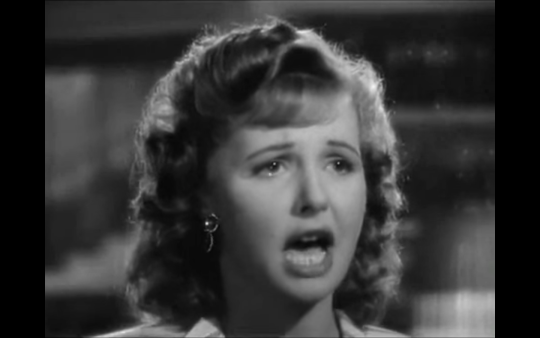
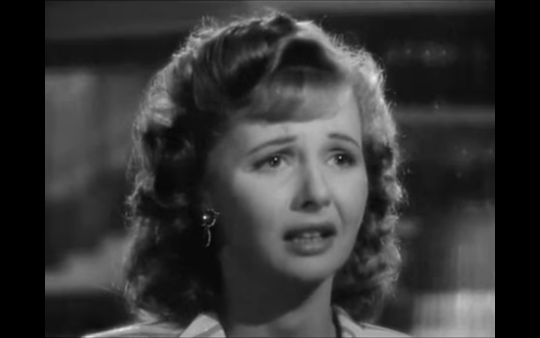
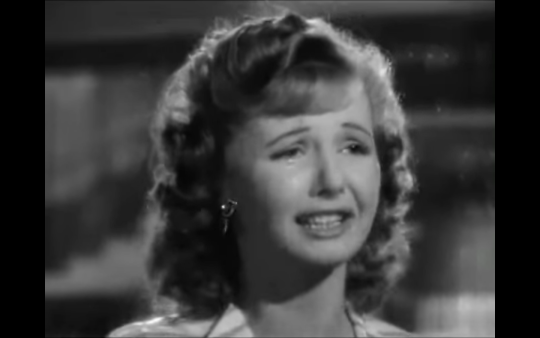
there’s one person in this scene that deserves special mention. did you notice the woman at the bar, on the verge of tears as she belts out la marseillaise? she’s yvonne, rick’s ex-girlfriend in the film. in real life, the actress’s name is madeleine lebeau and she basically lived the plot of this film: she and her jewish husband fled paris ahead of the germans in 1940. her husband, macel dalio, is also in the film, playing the guy working the roulette table. after they occupied paris, the nazis used his face on posters to represent a “typical jew.” madeleine and marcel managed to get to lisbon (the goal of all the characters in casablanca), and boarded a ship to the americas… but then they were stranded for two months when it turned out their visa papers were forgeries. they eventually entered the US after securing temporary canadian visas. marcel dalio’s entire family died in concentration camps.
go back and rewatch the clip. watch madeleine lebeau’s face.
casablanca is a classic, full of classic acting performances. but in this moment, madeleine lebeau isn’t acting. this isn’t yvonne the jilted lover onscreen. this is madeleine lebeau, singing “la marseillaise” after she and her husband fled france for their lives. this is a real-life refugee, her real agony and loss and hope and resilience, preserved in the midst of one of the greatest films of all time.
I remember when I first saw Casablanca, and being struck by this scene, and that was without knowing the history behind it or all that Madeleine Lebeau – and so many more refugees- had suffered.
Do yourself a solid and watch this film. Watch this scene. And most of all, remember refugees, the ones who lived then and especially the ones who live now.
I knew this movie, of course, it’s one of the mains from my mother’s list of movies you should see “At least once in a lifetime”, but I had never until now felt any desire to watch it.
It’s one of those movies where context and the (not so quite) subtle subtext are vitally important to understanding the importance of it, not only as a classic piece of film making (hokey old timey speech and all), but as a political and social commentary of the times, rooted fiercely in protest and a whole lot of “fuck you fascists”.
I never really got it until my father (raised by his Jewish grandmother who fled Austria with the clothes on her back and a single suitcase and swathes of dead loved ones left behind) sat me down and told me the full context of when the movie was made, what it was actually about and who it was made for.
It made his casual way of saying “here’s looking at you kid” whenever we skipped school to go to protest rallies (start of the Iraq war) all the more poignant for me. I just thought he was being an old man quoting the popular cult media from his youth. But it means so much more than that.
Cause here’s the thing about that iconic line from the end of the movie: you’ll find screeds and screeds of people talking about how he’s using it to flirt with her once last time and just how suave it is, alluding that it’s purely about her youth and beauty and his ever lasting love for her even though she’s married to someone else.
But that line? Had been in use for a good 50+ years prior to Casablanca gracing the screens. It’s a toast, a wish for your health. And the people watching would have known the significance of it, particularly the displaced Europeans knowing that they’ll likely never see their loved ones again.
Cause here’s looking at you kid– and the unspoken meaning behind it– one last time.
Rick isn’t just letting go of the love of his life in that scene. He’s using his position of power and privilege as an American with access to outside networks (predominantly crime related, but hey) to help her escape the country with her highly persecuted and sought after husband to a place of safety.
He had the option to just take her himself and run– and her husband even urges him to do so at one point. But Rick endeavors to get them both to safety, and he shows up armed to do so. He fights for their freedom even though he doesn’t have to. He goes from staunchly refusing to help them out of bitterness and cynicism, to realizing that if he doesn’t do something people are going to die. And he doesn’t just save the woman he loves, which would be oh so easy. He saves the man he hates too. Because he can, so he must.
The final scene ends with Renault (played by Claude Rains, an Englishman), head of the local police (and a character largely played for laughs), making the decision not to arrest Rick or anyone else involved when ordered to, actively defying the orders of a fascist. When he and Rick are walking away, he insinuates that he and Rick should join the French Resistance movement in
Brazzaville, and Rick again delivers the other iconic line from the movie: “Louis, I think this is the beginning of a beautiful friendship.”
Casablanca is about forging alliances in the face of tyranny. It’s about doing what is right, even though it goes against the law when the law is corrupt. It’s about being willing to give up your own liberties and comfort to preserve the things you love, even though it won’t directly benefit you. Hell, it might even kill you. But someone’s got to do it.
And yea, it’s old, it’s dated and a product of it’s time and it shows. There are times when the modern viewer will cringe and rightly so. But it was also incredibly out there for its time, when the world was going to absolute hell in a hand basket and it seemed like the walls were closing in, it held many important messages, but primarily: Resist.
So here’s looking at you, kids.
Oh my god, I wrote a whole paper on this for advanced comp last year and let me tell you:
only 3 (THREE) of the credited actors were american born– Humphrey Bogart, Dooley Wilson, and Joy Page. Every other actor (and a large part of the crew as as well) was an immigrant, emigree, refugee, whatever you want to call them. This was a story about and made by refugees. Pauline Kael, an acclaimed film critic for The New Yorker, said about the movie, “If you think of Casablanca, and think of all those small roles as being played by
Hollywood actors faking the accents, the picture wouldn’t have had anything
like the color and tone it had.”
and by god was she right.
Madeline LeBeau, chased from her home at 17 years old, sobbing during La Marseilles, doesn’t have the same effect.
Paul Henreid, self-described as “naked in four countries,” playing a man desperate to continue to fight the good fight, doesn’t have the same effect.
Conrad Veidt, who played sympathetic Jewish characters, whose wife was Jewish, whom the Nazis denounced, saying “
there will no longer be any reason for a single finger in Germany to
point to him in praise;” Conrad Veidt, who gave personal loans to the British government, who donated the majority of his earnings to war relief efforts, who was vehemently anti-Nazi, who was typecast as Hollywood’s go-to Nazi, who died only a year after the film premiered, who never got the chance to rebuild what was a stunning career, who has been forever known as Major Strausser– even his sheep-in-wolf’s-clothing performance does not have the same effect.
There’s only one clear mention of time in the entire film– “If it’s December 1941 in Casablanca, what time is it in New York?” Rick asks Sam, before he’s made his decision.
Casablanca was released in 1942, after the US had entered the war. In December, 1941. “If this is happening now,” Rick might have asked Sam, “what time is the right time to act?”
Michael Roth is a professor as Weslyan University, who teaches a history through film course. He says the only movie most of his students have heard about is Casablanca, and teaching it recently was much different than previous semesters.
“The immigrant story at the heart of Casablanca
is more powerful than ever. Many of my students are sympathetic to the refugees
escaping brutal conditions, and in our current political atmosphere this is no
small theme.” The lasting effect of Casablanca, is that it “forces us to consider what it takes for good people to act in a corrupt
world.”
Does it take a teary-eyed rendition of a national anthem, sung by
real-life refugees, to call us to action? Does it take love? Or does it just
take a little bit of aspiration, some gumption, and a willingness to look at
the big picture?


 failed2be-chill