I see many Winnie the Poohs at the hospital (aka Winnie aka Pooh aka Pooh Bear), as you may guess. Many look like this, a bit flat and with small wounds, designed to have a removable shirt:
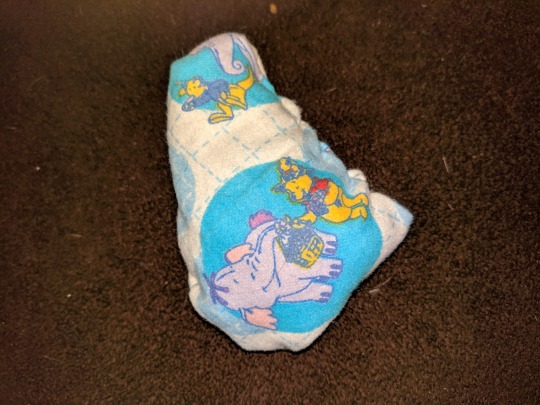
They come for spas:
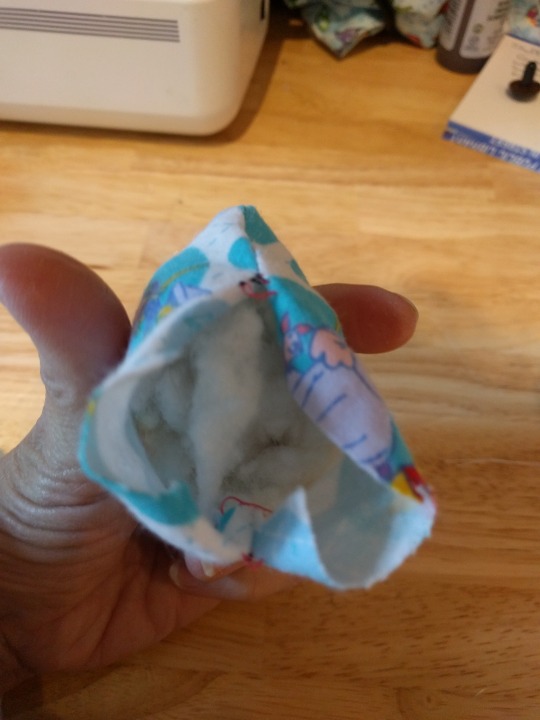
New hearts and stuffing:
And plumping up so they have a proper belly again:
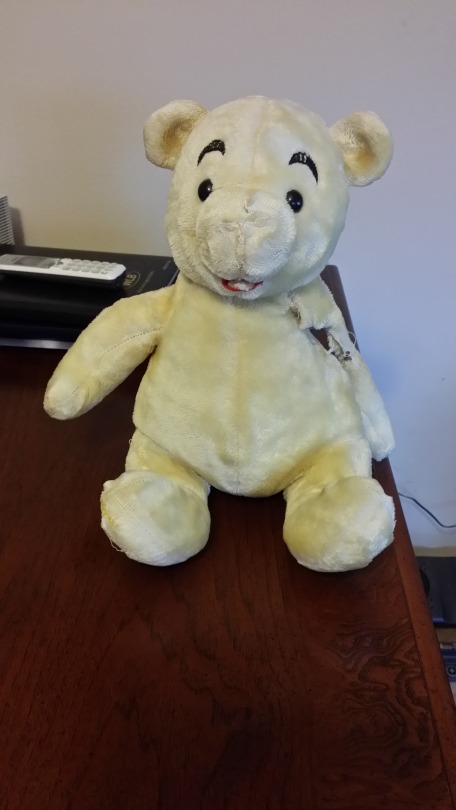
Sometimes they look like this:
A bit more loved… or as his person said, in more “desperate condition”.
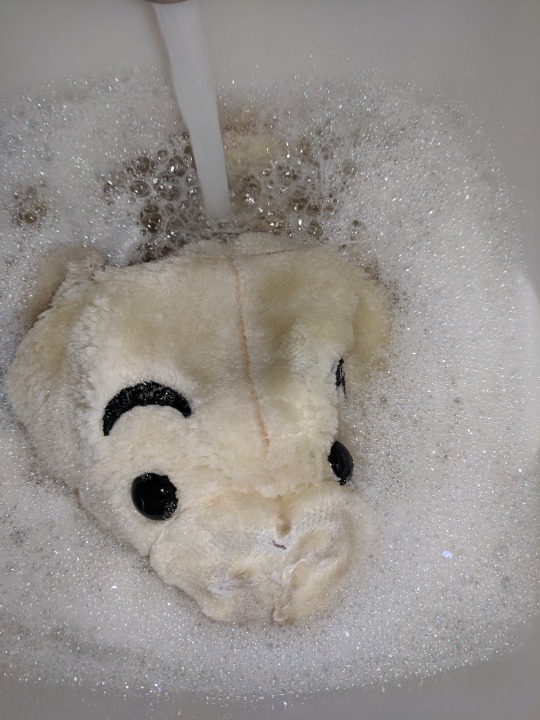
He also had a spa (not everyone does):
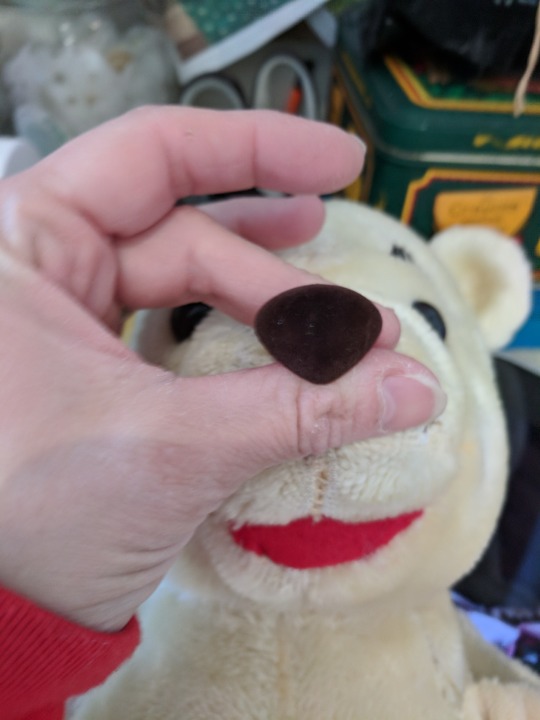
As you may’ve noticed, he needed a new nose and there were several options:
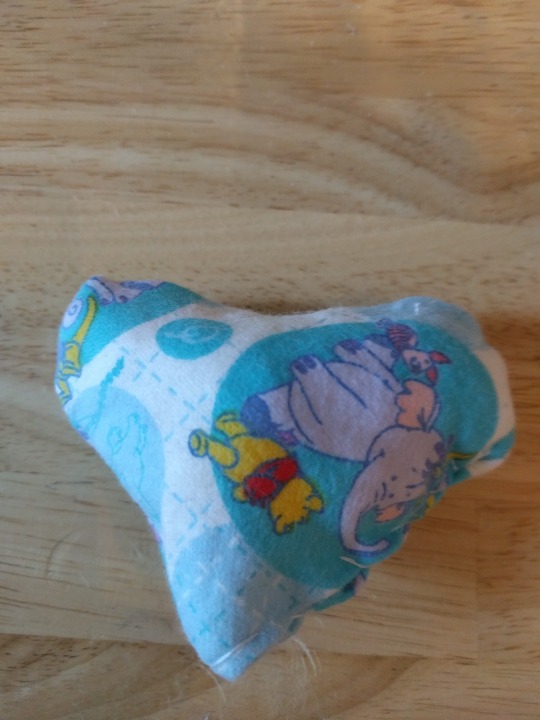
His heart had a pooh on it as well as some magic from a heffalump:
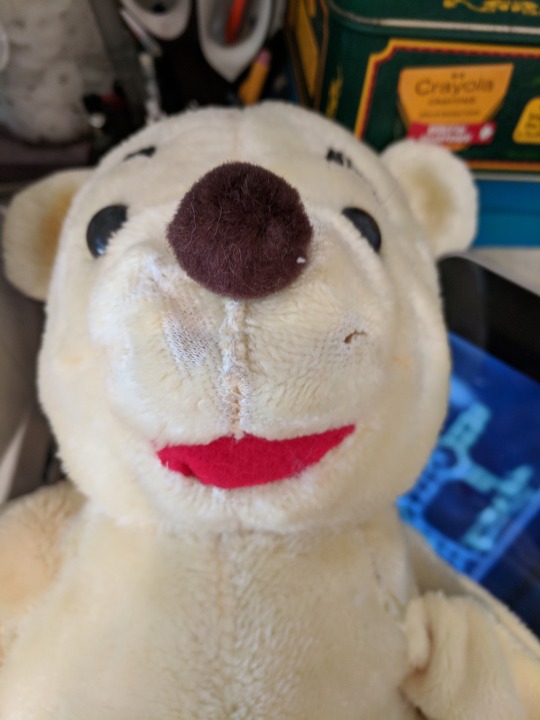
And after a bit of arm and smile surgery, soon he was healthy and ready to fly home:
His person wrote “He looks wonderful!”
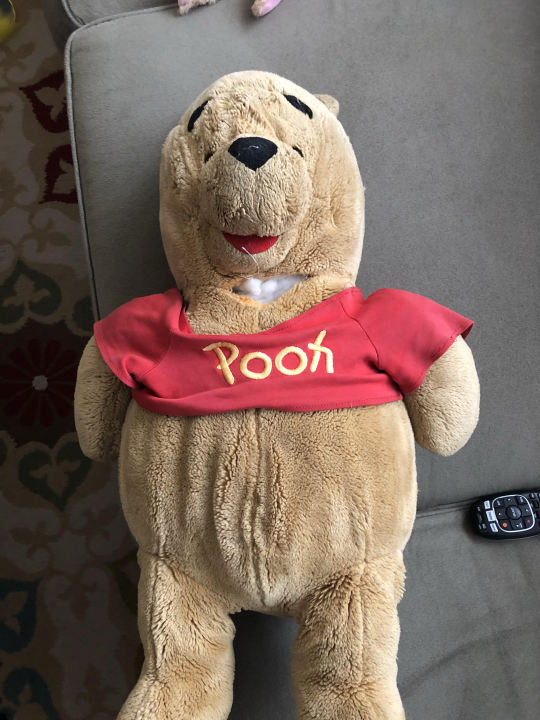
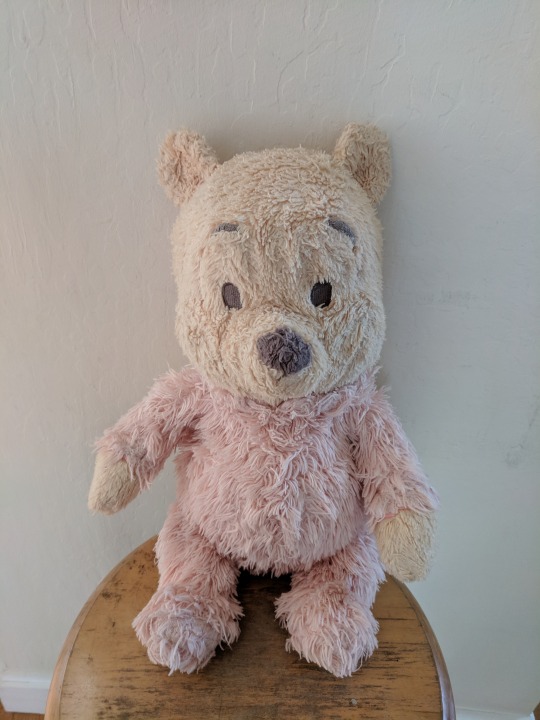
The final Pooh I’m going to show you today just flew home yesterday. He is always called Pooh Bear. He is 14 years old and showed every year of hugs.
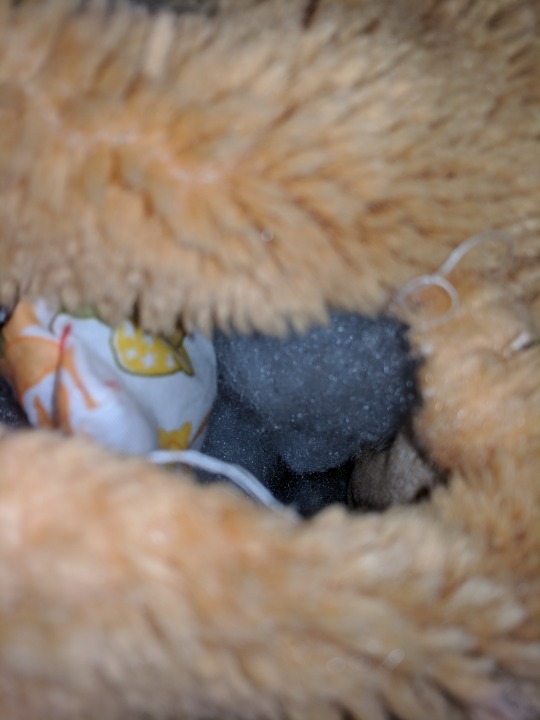
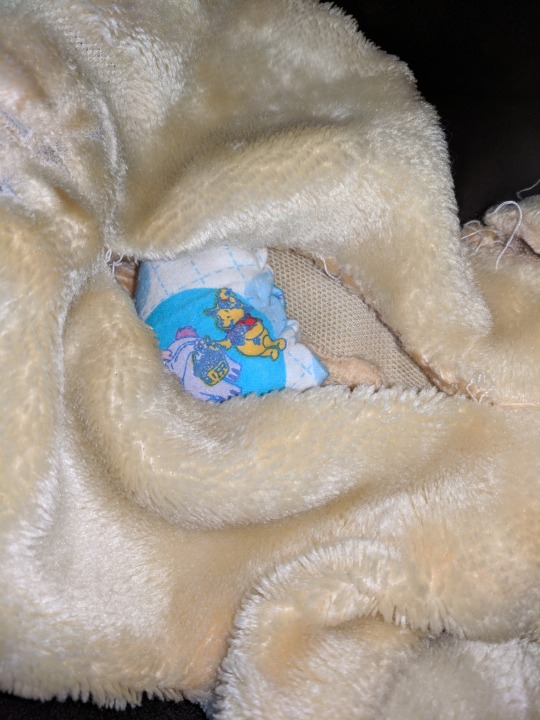
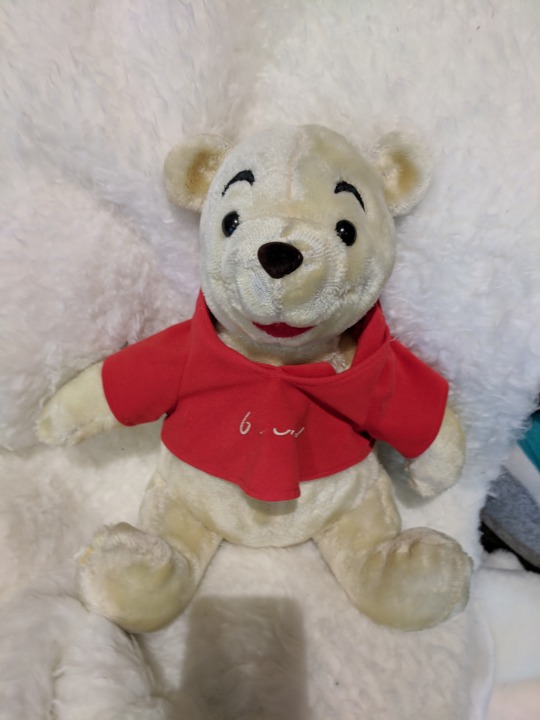
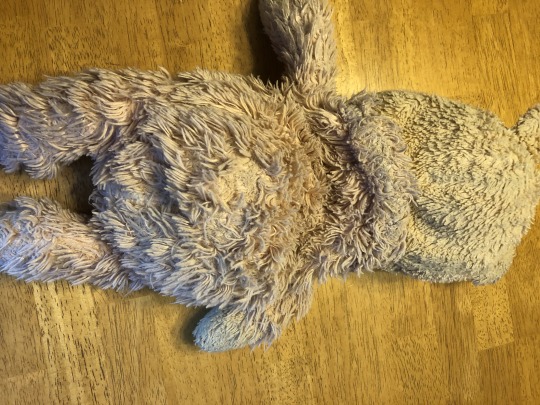
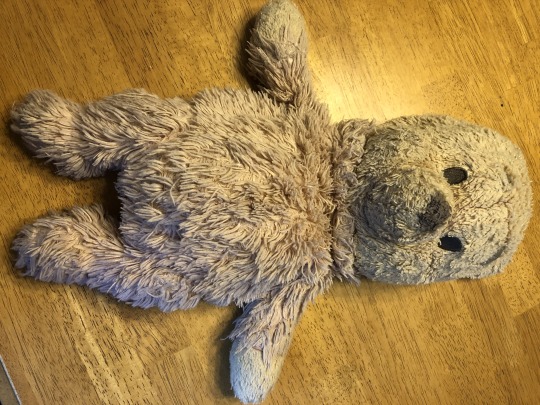
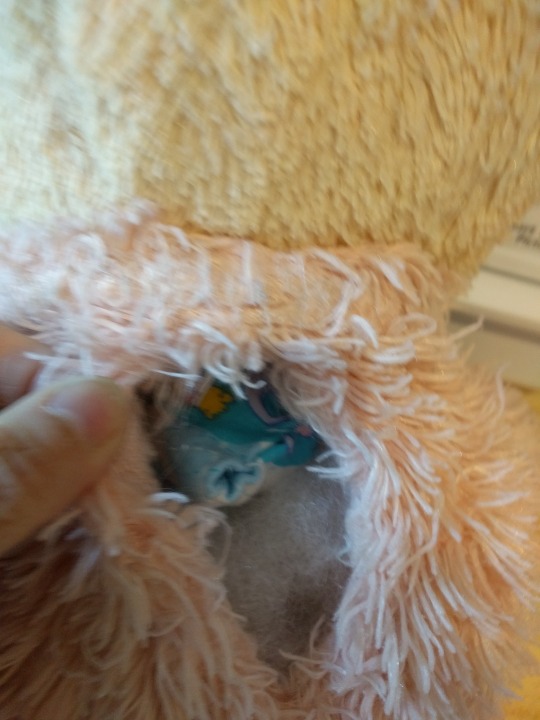
Here are the photos his person’s mom sent for diagnosis:
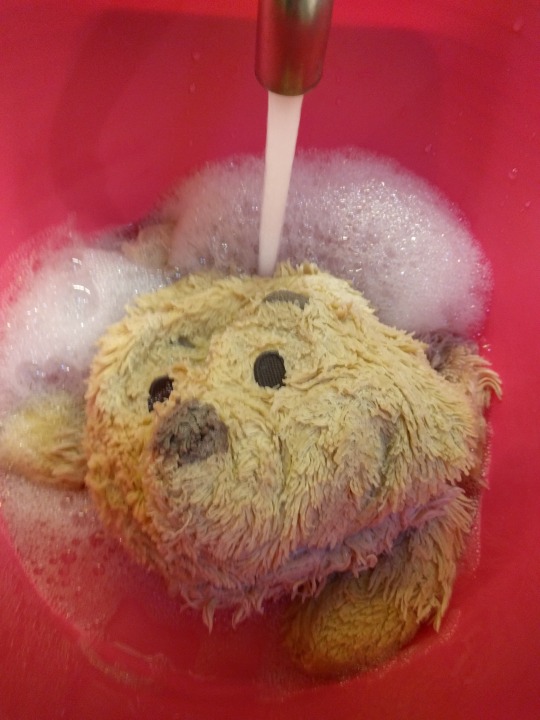
As you can see, Pooh Bear was a bit flat and a bit gray. He came in for a spa:
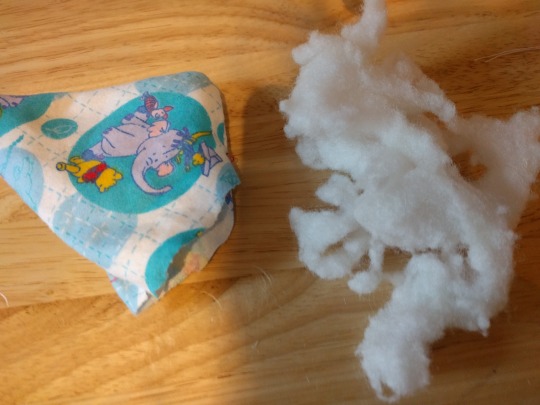
Got new stuffing and a magical Heffalump heart to preserve a bit of his original stuffing:
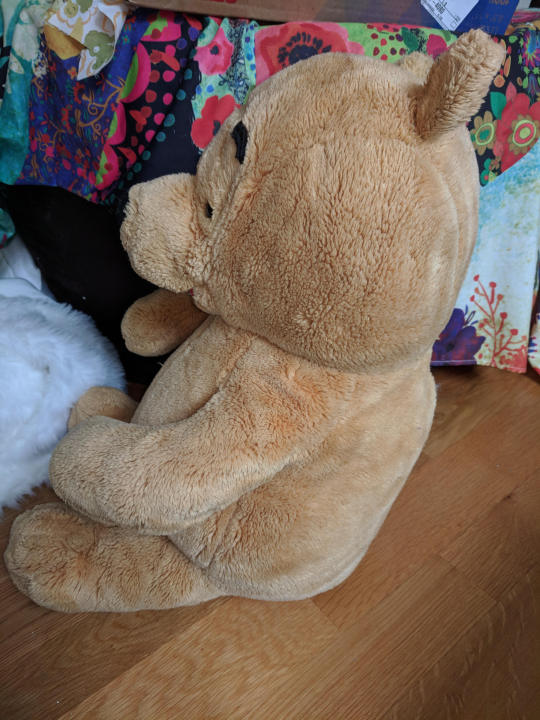
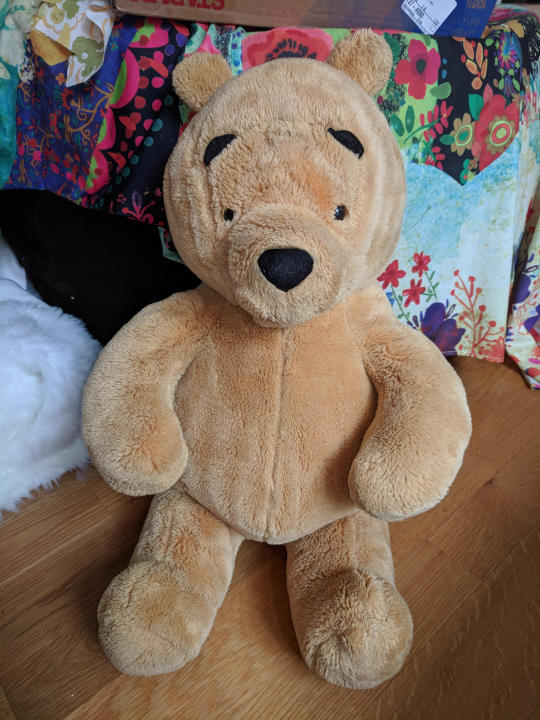
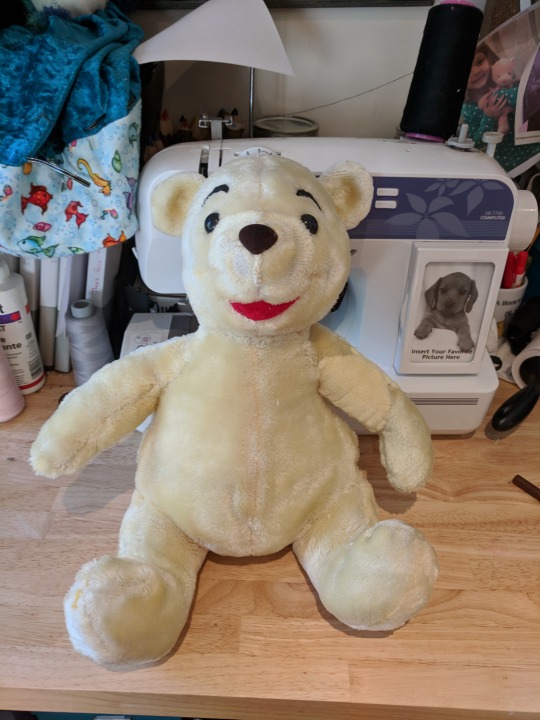
And finally was clean and plump and fluffy and ready to fly home:
He could even sit on his own! His people said his chubbiness was perfect and as I said, he flew home yesterday!
What annoys the FUCK out of me about the ‘all historians are out there to erase queerness from history’ thing on Tumblr is that it’s just one of those many attitudes that flagrantly mischaracterises an entire academic field and has a complete amateur thinking they know more than people who’ve spent fucking years studying said field.
Like someone will offer a very obvious example of – say – two men writing each other passionate love letters, and then quip about how Historians will just try to say that affection was just different ‘back then’. Um…no. If one man writes to another about how he wants to give him 10 000 kisses and suck his cock, most historians – surprise surprise! – say it’s definitely romantic, sexual love. We aren’t Victorians anymore.
It also completely dismisses the fact of how many cases of possible queerness are much more ambiguous that two men writing to each other about banging merrily in a field. The boundaries of platonic affection are hugely variable depending on the time and place you’re looking at. What people mock us for saying is true. Nuance fucking exists in the world, unlike on this hellscape of a site.
It is a great discredit to the difficult work that historians do in interpreting the past to just assume we’re out there trying to straightwash the past. Queer historians exist. Open-minded allies exist.
I’m off to down a bottle of whisky and set something on fire.
It’s also vaguely problematic to ascribe our modern language
and ideas of sexuality to people living hundreds or even thousands of years
ago. Of course queer people existed then—don’t be fucking daft, literally any
researcher/historian/whatever worth their salt with acknowledge this. But as
noted above, there’s a lot of ambiguity as well—ESPECIALLY when dealing with a
translation of a translation of a copy of a damaged copy in some language that
isn’t spoken anymore. That being said, yes, queer erasure happens, and it
fucking sucks and hurts. I say that as a queer woman and a baby!researcher. But
this us (savvy internet historian) vs. them (dusty old actual historian)
mentality has got to stop.
You’re absolutely right.
I see the effect of applying modern labels to time periods when they didn’t have them come out in a bad way when people argue about whether some historical figure was transmasculine or a butch lesbian. There were some, of course, who were very obviously men and insisted on being treated as such, but with a lot of people…we just don’t know and we never will. The divide wasn’t so strong back in the late 19th century, for example. Heck, the word ‘transmasculine’ didn’t exist yet. There was a big ambiguous grey area about what AFAB people being masculine meant, identity-wise.
Some people today still have a foot in each camp. Identity is complicated, and that’s probably been the case since humans began to conceptualise sexuality and gender.
That’s why the word ‘queer’ is such a usefully broad and inclusive umbrella term for historians.
Also, one more thing and I will stop (sorry it’s just been so long since I’ve gotten to rant). Towards the beginning of last semester, I was translating “Wulf and Eadwacer” from Old English. This is a notoriously ambiguous poem, a p p a r e n t l y, and most of the other students and I were having a lot of trouble translating it because the nouns and their genders were all over the place (though this could be because my memory is slipping here) which made it hella difficult to figure out word order and syntax and (key) the fucking gender of everything. In class, though, my professor told us that the gender and identity of the speaker were actually the object of some debate in the Anglo-Saxonist community. For the most part, it was assumed that the principal speaker of the poem is a woman (there is one very clear female translation amongst all that ambiguity) mourning the exile of her lover/something along those lines. But there’s also some who say that she’s speaking of her child. And some people think the speaker of the poem is male and talking abut his lover. And finally, there’s some people who think that the speaker of the poem is a fucking BADGER, which is fucking wild and possibly my favorite interpretation in the history of interpretations.
TL;DR—If we can’t figure out beyond the shadow of a doubt whether the speaker is a human or a fucking badger, then we certainly can’t solidly say whether a speaker is queer or not. This isn’t narrowmindedness, this is fucking what-the-hell-is-this-language-and-culture (and also maybe most of the manuscripts are pretty fucked which further lessens knowledge and ergo certainty).
Also, if there’s nothing to debate, what’s even the fun in being an historian?
All of this.
I had a student once try to tell me that I was erasing queer history by claiming that a poem was ambiguous. I was trying to make the point that a poem was ambiguous and that for the time period we were working with, the identities of “queer” and “straight” weren’t so distinctive. Thus, it was possible that the poem was either about lovers or about friends because the language itself was in that grey area where the sentiment could be romantic or just an expression of affection that is different from how we display affection towards friends today.
And hoo boy. The student didn’t want to hear that.
It’s ok to admit ambiguity and nuance. Past sexualities aren’t the same as our modern ones, and our understanding of culture today can’t be transferred onto past cultures. It just doesn’t work. The past is essentially a foreign culture that doesn’t match up perfectly with current ones – even if we’re looking at familiar ones, like ancient or medieval Europe. That means our understanding of queerness also has to account for the passage of time. I think we need to ask “What did queerness look like in the past?” as opposed to “How did queerness as we understand it today exist in the past?” As long as we examine the past with an understanding that not all cultures thought same-sex romance/affection/sexual practice was sinful, we’re not being homophobic by admitting there can be nuance in a particular historical product.
I know a lot of very smart people who are working on queerness in medieval literature and history. And yes, there are traditions of scholars erasing queer history because they themselves are guided by their own ideologies. We all are. It’s impossible to be 100% objective about history and its interpretation. But that doesn’t mean there isn’t good work being done by current scholars, including work that corrects the bad methodologies of the past.
also yeah, the key thing that’s helped me as a student of history is learning that using language outside of modern labels shouldnt erase queerness, but should complicate it.
You know, this scene is so powerful to me that sometimes I forget that not everyone who watches it will understand its significance, or will have seen Casablanca. So, because this scene means so much to me, I hope it’s okay if I take a minute to explain what’s going on here for anyone who’s feeling left out.
Casablanca takes place in, well, Casablanca, the largest city in (neutral) Morocco in 1941, at Rick’s American Cafe (Rick is Humphrey Bogart’s character you see there). In 1941, America was also still neutral, and Rick’s establishment is open to everyone: Nazi German officials, officials from Vichy (occupied) France, and refugees from all across Europe desperate to escape the German war engine. A neutral cafe in a netural country is probably the only place you’d have seen a cross-section like this in 1941, only six months after the fall of France.
So, the scene opens with Rick arguing with Laszlo, who is a Czech Resistance fighter fleeing from the Nazis (if you’re wondering what they’re arguing about: Rick has illegal transit papers which would allow Laszlo and his wife, Ilsa, to escape to America, so he could continue raising support against the Germans. Rick refuses to sell because he’s in love with Laszlo’s wife). They’re interrupted by that cadre of German officers singing Die Wacht am Rhein: a German patriotic hymn which was adopted with great verve by the Nazi regime, and which is particularly steeped in anti-French history. This depresses the hell out of everybody at the club, and infuriates Laszlo, who storms downstairs and orders the house band to play La Marseillaise: the national anthem of France.
Wait, but when I say “it’s the national anthem of France,” I don’t want you to think of your national anthem, okay? Wherever you’re from. Because France’s anthem isn’t talking about some glorious long-ago battle, or France’s beautiful hills and countrysides. La Marseillaise is FUCKING BRUTAL. Here’s a translation of what they’re singing:
Arise, children of the Fatherland! The day of glory has arrived! Against us, tyranny raises its bloody banner. Do you hear, in the countryside, the roar of those ferocious soldiers? They’re coming to your land to cut the throats of your women and children!
To arms, citizens! Form your battalions! Let’s march, let’s march! Let their impure blood water our fields!
BRUTAL, like I said. DEFIANT, in these circumstances. And the entire cafe stands up and sings it passionately, drowning out the Germans. The Germans who are, in 1941, still terrifyingly ascendant, and seemingly invincible.
“Vive la France! Vive la France!” the crowd cries when it’s over. France has already been defeated, the German war machine roars on, and the people still refuse to give up hope.
But here’s the real kicker, for me: Casablanca came out in 1942. None of this was ‘history’ to the people who first saw it. Real refugees from the Nazis, afraid for their lives, watched this movie and took heart. These were current events when this aired. Victory over Germany was still far from certain. The hope it gave to people then was as desperately needed as it has been at any time in history.
God I love this scene.
not only did refugees see this movie, real refugees made this movie. most of the european cast members wound up in hollywood after fleeing the nazis and wound up.
paul heinreid, who played laszlo the resistance leader, was a famous austrian actor; he was so anti-hitler that he was named anenemy of the reich.ugarte, the petty thief who stole the illegal transit papers laszlo and victor are arguing about? was played by peter lorre, a jewish refugee. carl, the head waiter? played by s.z. sakall, a hungarian-jewwhose three sisters died in the holocaust.
even the main nazi character was played by a german refugee: conrad veidt, who starred in one of the first sympathetic films about gay men and who fled the nazis with his jewish wife.
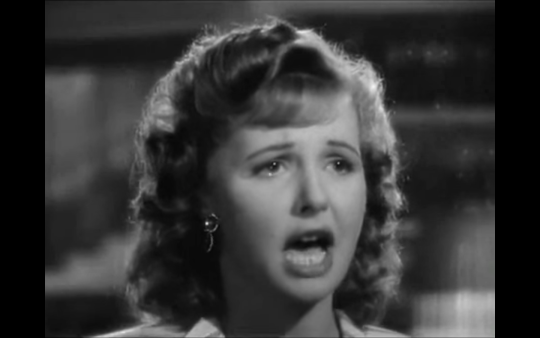
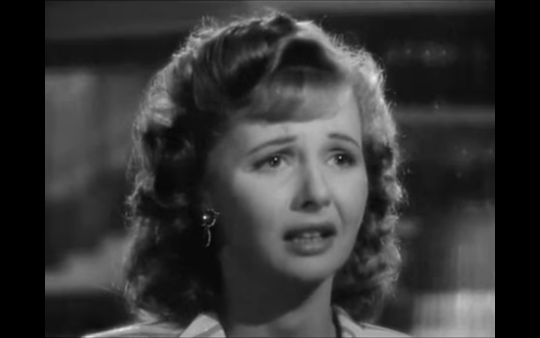
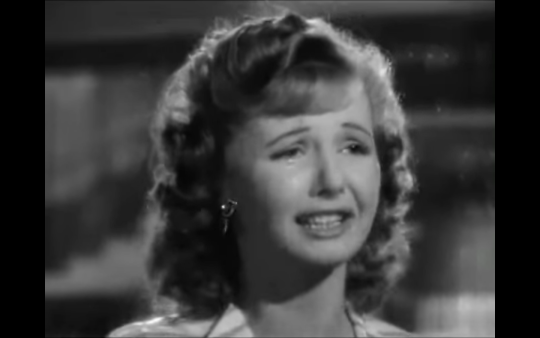
there’s one person in this scene that deserves special mention. did you notice the woman at the bar, on the verge of tears as she belts out la marseillaise? she’s yvonne, rick’s ex-girlfriend in the film. in real life, the actress’s name is madeleine lebeau and she basically lived the plot of this film: she and her jewish husband fled paris ahead of the germans in 1940. her husband, macel dalio, is also in the film, playing the guy working the roulette table. after they occupied paris, the nazis used his face on posters to represent a “typical jew.” madeleine and marcel managed to get to lisbon (the goal of all the characters in casablanca), and boarded a ship to the americas… but then they were stranded for two months when it turned out their visa papers were forgeries. they eventually entered the US after securing temporary canadian visas. marcel dalio’s entire family died in concentration camps.
go back and rewatch the clip. watch madeleine lebeau’s face.
casablanca is a classic, full of classic acting performances. but in this moment, madeleine lebeau isn’t acting. this isn’t yvonne the jilted lover onscreen. this is madeleine lebeau, singing “la marseillaise” after she and her husband fled france for their lives. this is a real-life refugee, her real agony and loss and hope and resilience, preserved in the midst of one of the greatest films of all time.
I remember when I first saw Casablanca, and being struck by this scene, and that was without knowing the history behind it or all that Madeleine Lebeau – and so many more refugees- had suffered.
Do yourself a solid and watch this film. Watch this scene. And most of all, remember refugees, the ones who lived then and especially the ones who live now.
I knew this movie, of course, it’s one of the mains from my mother’s list of movies you should see “At least once in a lifetime”, but I had never until now felt any desire to watch it.
It’s one of those movies where context and the (not so quite) subtle subtext are vitally important to understanding the importance of it, not only as a classic piece of film making (hokey old timey speech and all), but as a political and social commentary of the times, rooted fiercely in protest and a whole lot of “fuck you fascists”.
I never really got it until my father (raised by his Jewish grandmother who fled Austria with the clothes on her back and a single suitcase and swathes of dead loved ones left behind) sat me down and told me the full context of when the movie was made, what it was actually about and who it was made for.
It made his casual way of saying “here’s looking at you kid” whenever we skipped school to go to protest rallies (start of the Iraq war) all the more poignant for me. I just thought he was being an old man quoting the popular cult media from his youth. But it means so much more than that.
Cause here’s the thing about that iconic line from the end of the movie: you’ll find screeds and screeds of people talking about how he’s using it to flirt with her once last time and just how suave it is, alluding that it’s purely about her youth and beauty and his ever lasting love for her even though she’s married to someone else.
But that line? Had been in use for a good 50+ years prior to Casablanca gracing the screens. It’s a toast, a wish for your health. And the people watching would have known the significance of it, particularly the displaced Europeans knowing that they’ll likely never see their loved ones again.
Cause here’s looking at you kid– and the unspoken meaning behind it– one last time.
Rick isn’t just letting go of the love of his life in that scene. He’s using his position of power and privilege as an American with access to outside networks (predominantly crime related, but hey) to help her escape the country with her highly persecuted and sought after husband to a place of safety.
He had the option to just take her himself and run– and her husband even urges him to do so at one point. But Rick endeavors to get them both to safety, and he shows up armed to do so. He fights for their freedom even though he doesn’t have to. He goes from staunchly refusing to help them out of bitterness and cynicism, to realizing that if he doesn’t do something people are going to die. And he doesn’t just save the woman he loves, which would be oh so easy. He saves the man he hates too. Because he can, so he must.
The final scene ends with Renault (played by Claude Rains, an Englishman), head of the local police (and a character largely played for laughs), making the decision not to arrest Rick or anyone else involved when ordered to, actively defying the orders of a fascist. When he and Rick are walking away, he insinuates that he and Rick should join the French Resistance movement in
Brazzaville, and Rick again delivers the other iconic line from the movie: “Louis, I think this is the beginning of a beautiful friendship.”
Casablanca is about forging alliances in the face of tyranny. It’s about doing what is right, even though it goes against the law when the law is corrupt. It’s about being willing to give up your own liberties and comfort to preserve the things you love, even though it won’t directly benefit you. Hell, it might even kill you. But someone’s got to do it.
And yea, it’s old, it’s dated and a product of it’s time and it shows. There are times when the modern viewer will cringe and rightly so. But it was also incredibly out there for its time, when the world was going to absolute hell in a hand basket and it seemed like the walls were closing in, it held many important messages, but primarily: Resist.
So here’s looking at you, kids.
Oh my god, I wrote a whole paper on this for advanced comp last year and let me tell you:
only 3 (THREE) of the credited actors were american born– Humphrey Bogart, Dooley Wilson, and Joy Page. Every other actor (and a large part of the crew as as well) was an immigrant, emigree, refugee, whatever you want to call them. This was a story about and made by refugees. Pauline Kael, an acclaimed film critic for The New Yorker, said about the movie, “If you think of Casablanca, and think of all those small roles as being played by
Hollywood actors faking the accents, the picture wouldn’t have had anything
like the color and tone it had.”
and by god was she right.
Madeline LeBeau, chased from her home at 17 years old, sobbing during La Marseilles, doesn’t have the same effect.
Paul Henreid, self-described as “naked in four countries,” playing a man desperate to continue to fight the good fight, doesn’t have the same effect.
Conrad Veidt, who played sympathetic Jewish characters, whose wife was Jewish, whom the Nazis denounced, saying “
there will no longer be any reason for a single finger in Germany to
point to him in praise;” Conrad Veidt, who gave personal loans to the British government, who donated the majority of his earnings to war relief efforts, who was vehemently anti-Nazi, who was typecast as Hollywood’s go-to Nazi, who died only a year after the film premiered, who never got the chance to rebuild what was a stunning career, who has been forever known as Major Strausser– even his sheep-in-wolf’s-clothing performance does not have the same effect.
There’s only one clear mention of time in the entire film– “If it’s December 1941 in Casablanca, what time is it in New York?” Rick asks Sam, before he’s made his decision.
Casablanca was released in 1942, after the US had entered the war. In December, 1941. “If this is happening now,” Rick might have asked Sam, “what time is the right time to act?”
Michael Roth is a professor as Weslyan University, who teaches a history through film course. He says the only movie most of his students have heard about is Casablanca, and teaching it recently was much different than previous semesters.
“The immigrant story at the heart of Casablanca
is more powerful than ever. Many of my students are sympathetic to the refugees
escaping brutal conditions, and in our current political atmosphere this is no
small theme.” The lasting effect of Casablanca, is that it “forces us to consider what it takes for good people to act in a corrupt
world.”
Does it take a teary-eyed rendition of a national anthem, sung by
real-life refugees, to call us to action? Does it take love? Or does it just
take a little bit of aspiration, some gumption, and a willingness to look at
the big picture?
Guess I should be glad I was a skinny kid.
Otherwise, you’d have delivered me to this maniac.
#actually the thing I love best about this scene#(well besides EVERYTHING)#is that this is when I first realized#that Peter’s not afraid of Yondu AT ALL#which I think is important for what his childhood was like?#Peter’s got a lot of justifiable resentment about it#but he didn’t grow up afraid of Yondu#he backtalks him without even really thinking about it#he doesn’t have the ‘flinch’ reaction that abused children have#(e.g. how Mantis is with Ego is a TEXTBOOK example of it)#Yondu might’ve done a lot wrong#but Peter grew up confident and self-assured#and that doesn’t happen by accident (via laylainalaska)
Seriously: compare his body language around Yondu with Mantis’ around Ego, or Gamora’s around Thanos, for that matter. Peter is frequently irritated and resentful with Yondu, but there is none of the wary watchfulness that both of them display–you get the sense that neither woman would like to turn their back on their ‘parent’, let alone let their guard down.
Whereas Peter rolls his eyes at Yondu, pushes back at him, visibly blows him off. Doesn’t even seem to blink when Yondu is literally threatening to kill him until he comes up with a good reason not to.
Literally the only thing I think I’ve ever seen phase Peter around Yondu is the moment where he pawns the troll doll off on Yondu instead of the Stone, and that’s the moment when he explictly says he believes that Yondu will hate him forever now.
No, seriously: I genuinely believe that Peter and Yondu never communicated between vol 1 and vol 2, and that Peter truly believed he’d severed their relationship forever over that trick and was quietly grieving at the same time as he was trying to process his (justified, again) resentments. You can actually see him grieving at Gamora in the end of vol 1, and she just totally fails to get it; to her, Yondu is clearly taking the role of Thanos in her head.
YES, THIS.
I agree that Yondu and Peter probably didn’t have contact between the two movies. Which makes it all the more tragilarious that Yondu had a tracker on Peter’s ship and could have found him anytime he wanted, but he didn’t because he was trying to let Peter make his own choices and waiting for Peter to come to him … while Peter was (almost certainly) pining for a call from Yondu to let him know that Yondu did not, in fact, hate his guts and plan to kill him on sight. (JUST COMMUNICATE, YOU FREAKIN’ LUNKHEADS.)
Anyway, I love your point about Gamora thinking of Peter’s relationship with Yondu through the lens of her own experiences with Thanos. I’ve occasionally seen meta and fic taking for granted that Gamora’s comment to Peter after Yondu takes the orb is objectively accurate, that she’s an unbiased observer of their relationship, but she’s really, really not. She’s trying to comfort and reassure Peter like she wishes someone had reassured her about Thanos (it doesn’t matter, he’s no kin of yours, you don’t owe him anything) but she misreads the situation completely. Not that her reasons aren’t valid – not only is she drawing on her own experience with Thanos, but the one time she saw Peter and Yondu interact, Yondu was threatening to kill him! But she doesn’t have the whole picture.
Oh, absolutely. And in fact, you can see her also projecting her own relationships with her adoptive and biological parents onto Peter and Ego in Vol 2, which is a nice little bit of continuum in characterization: she’s much quicker to push Peter to reach out to Ego and try with him than Peter himself is! And I think that really comes from, as you say, the opportunities Gamora wishes she’d had for herself.
She’s not exactly wrong or right in her reading given the information she has to work with–but hoo boy, is she not an objective source. This is one of the reasons that it really bugs me when I see Gamora written as emotionally capable in the same way that she’s professionally capable, like she knows jack all about how relationships and social interactions and family works. Because in many ways volume 2 is constantly showing us that Gamora, despite being a very bright and accomplished woman, has terrible emotional intelligence. She knows how to function in a professional setting, but she’s really not good at assessing or articulating relationships in a personal setting. And why should she be? She has no practice. She’s taken that entire part of her life and compartmentalized it away since childhood, to survive.
It’s a thing I love about her: she is perhaps the most competent of the Guardians in terms of executing professional jobs, but she is not the emotional center of the team, and she is certainly not Team Mom. She isn’t, emotionally, an adult quite yet–she’s just too inexperienced and she makes too many inept projection mistakes. She’s learning from them, don’t get me wrong–look at her relationship with Nebula!–but I’d actually say that even Nebula is more emotionally fluent than she is. Nebula is at least willing and capable of acknowledging and articulating the unspoken dynamics of her relationship with Gamora, whereas I am genuinely not sure Gamora understood why she was putting herself out to get Nebula safe, even if also safe and imprisoned. She doesn’t act like she knows why she’s doing what she’s doing at all.
No, the emotional heart of the team–and this is another thing I love about Guardians–is really Peter, who is easily the most emotionally perceptive person on the team except perhaps for adult Groot, and that’s not really a fair comparison to either of them on account of alien minds. Peter is the Team Mom. Gamora is, most accurately, Team Dad–and the sort of dad who can’t sort out a situation better than yelling “if you don’t shut up I’m going to turn this car around and no one is going to Disneyland” at that.
Which is why it bugs me when Gamora is treated as 100% correct in her emotional assessments of situations–when we’re actually shown repeatedly that she is wrong about them–and treated like a “real adult” compared to, say, Drax and Rocket in fic. No. She’s as stunted and trying to make her way and learn as any of them, and I love that she–and Nebula, and Mantis!–get to be emotionally stunted as much as any of the boys. I love that we have this woman, this beautiful and intensely competent woman, who is so terrified of emotions and confused by social interactions and threatened by any attachment. I love this superficially elegant, grimly poised woman faking a lot more functionality than she has. I love this woman who is terrified more than almost anything else in the world (bar Thanos) by a cheerful, intensely socially awkward bumbling woman who wants nothing but the best for the people, but who might see her emotions and have her figured all out.
Because Gamora? Gamora is terrified of Mantis. She wants nothing to do with Mantis–she’ll say “you’re not ugly” because she thinks she should, but she switches immediately from casual mostly-friendly relaxation to taut, tense, frozen horror about Mantis the instant she finds out what Mantis can do. She views Mantis with suspicion every step of the way, and I think Mantis is actually the point at which she begins to pivot on Ego.
Gamora is not used to being imperfect. Gamora is not used to being in waters where she does not know what she is doing. And she does not know what she is doing when it comes to interpersonal relationships. She is flying blind and she knows it and she’s terrified to trust anyone, in case she’s wrong and it hurts her.
It’s one of the things I love about her relationship with Peter–his whole arc with her is Peter inviting her to trust him, trying to bend over backwards to be loving and welcoming. And the romance between them consists of Gamora learning to go… “okay. Do I dance? Am I willing to move for pleasure? Is it safe to let my guard down?” at its heart.
I love that. I love it so much. But most of all, I love her so much.
YES TO ALL OF THIS.
Gamora is awkward and emotionally stunted and damaged in real, serious ways that actually impact her relationships with other people, she’s not a ‘broken bird’ who’s only fucked up when it’s pretty and convenient, she’s not emotionally fluent or perceptive; she cares deeply for the people she loves, but she’s actually incredibly bad at showing it. She has no idea how to relax, no idea how to let her guard down, no idea how to be a person when she’s not on a job, because she hasn’t had that opportunity since she was a child. And it’s not often you get to see a female character–especially a hypercompetent badass like Gamora–be flailingly bad at relationships the way she is. I fucking love it.
Peter is an unprofessional juvenile asshole, but by Vol 2 he’s by far and away the most emotionally healthy, socially competent person in the group. The only reason anyone would slot Gamora into that role is some lingering idea that Girls Are Good At Emotions.
there are a lot of you damn gays out there — that will be the one thing i ever take away from being on this terriblé website, and i’m grateful to know it — and all of you & more are always wondering how to go about discovering lgbt cinema to watch, whether you’re starting from the bottom or you’re already past the “classics” google always regurgitates over and over. that’s why i want to talk about some resources you can use to learn about lgbt films new and old and national and international and good and bad and healthy and problematic — because lgbt cinema is varied and goes all the way back to silent film, and that’s the truest thing you should take away from this experience: people will tell you lgbt cinema is only finding its voice in recent years, but that is not the case; lgbt creatives have always had voices, just not the opportunities to use them. so let’s celebrate them!
note: lgbt cinema is not always explicit melodrama. a lot — no, most, considering the entire history of cinema — lgbt narratives are subtextual and/or coded. if you prefer stories like, say, brokeback mountain, in which the explicit physicality of their relationship is an active and essential part of the narrative — its foundation, its romance, its tragedy — i am not judging you whatsoever. we all like to see ourselves onscreen, and that includes the nsfw moments. but you have to understand coming into the history of film, which is over a hundred years old, that this can feel rare and far between in the years before, say, 1990. in a similar vein, a majority (as in, more than half) of lgbt cinema is problematic — sometimes to a startling degree. spatio-temporal context is important when we’re considering any film, but this does not necessarily excuse them. your relationship with each and every film is personal, but please be warned !
one of my all-time favourite resources for today’s films (which i believe is relevant to a lot of you who prefer contemporary technique and performance-driven narratives):
cannes film festival has been nominating lgbt-related films for an award called the queer palm for the last eight years, which encompasses international lgbt cinema, some of which is so niche they don’t even have wikipedia pages. these films are often incredible and diverse — they are not only about straight-passing beautiful white men, though some, inevitably, knowing the film industry as it is, are — and this is one of my favourite resources for parsing through contemporary cinema for the gay goodies !
for other mildly useful wikipedia pages, see these:
(the general wikipedia lgbt portal can be found here)
my favourite master list, though, exists on mubi. i know a lot of cinephile types go hard for letterboxd, but imo mubi is more organised, prettier, encourages a more intelligent and interesting community, and live streams art cinema all day for free (they have a streaming service you can pay for but you don’t have to). users can create lists, and here are a couple i reference a lot:
another thing i love about mubi is that they often have a reliable “related films” section of a film’s page. for example, i recently watched wild reeds, a gay film by andré téchiné (because of course he made a gay film — or ten), and when i scroll down to the bottom of its mubi page i can see “related” titles, which appear to be other téchiné titles, lgbt french films, and international coming-of-age romances. they’re not always related by genre (like lgbt), but i’ve found more than one film i want to watch by going to the pages of films i love and checking this feature out !
anyways, back to lists: one of my favourite resources in the natural world is bfi(; this is partly because i studied british cinema, so i am biased, but this does not mean all of their recommendations are british films, even if this is what they are most well-versed in). they create fantastic, dynamic lists that are not “best of,” but instead “hey here’s 10 great films,” and i appreciate that so much because trying to quantify all of cinema into some kind of categorical end-all, be-all list is 1) dumb 2) reductive 3) the kind of academic practice that crushes passion and awe 4) if philippe garrel says don’t do it then don’t do it. bfi has quite a few lgbt lists with tons of hidden treasure films:
I love watching people do the bare fucking minimum and still do just as well, if not better than me.
Okay but real talk guys the bare fucking minimum is how I saved my sanity during law school
When I was in my last year of undergrad, I had a professor who said that the only way he got through his degrees was by doing “the least amount of work for the best grade possible” and that shit stuck with me.
Got a prof who basically recites the textbook and doesn’t cold call? Fuck it – not reading for that class.
Open book exam? Not memorizing shit for that.
Class where paper is my major grade? That’s the class I skip for mental health time.
Law school is just as much about survival as it is the grades you come out with. If you’ve burned yourself out so badly that you can’t carry yourself past the finish line, you have failed yourself no matter how many A’s you have.
Also, just like, as a practical mater, you physically at some point in your life will not be able to give 100% to everything you are doing. Learning how to “do the bare minimum” is a life skill.
To bring in another law school example, due to scheduling weirdness back in the day and a total lack of necessary research, one of my profs in law school ended up taking the MPRE two days after the he finished taking the bar exam. Understandably, he did not put much time into actually preparing for the MPRE. No studying ahead of the bar and only like a few hours across the two days after. And he scored one point above what he needed to pass the MPRE. His lesson: “I don’t recommend the timing, but I’m glad I didn’t study more. It would have been a waste of time.”
To give another example from my life, I studied PR/marketing in college. Creative types are notorious perfectionists. My prof routinely reminded us that part of what we were learning was how to allocate our limited time and resources (including mental energy, creativity, etc) amongst all of the things we had to do. Because part of being a creative professional is being able to tell the difference between a project you should only spend an hour on–like, say, an internal company flyer for a required employee information session–and a project you should spend lots of time on–like an annual public report. Sure, you could make that flyer look *stellar* but is it a good use of your time? Is that the best use of your talents and limited resource? Is all of that work “worth” anything in the long run? Probably not. The difference in impact between an adequate flyer for the event and an incredible flyer is very very low; the employees have to come regardless.
At some point in school/work/life, you will hit a point where you physically cannot do your “absolute best” on everything you have to do. At that point, your only option is to admit that the goal isn’t to do the same level of amazing work on each thing, but to figure out what level of work each practically needs to achieve what’s needed.
If two students both get a good grade in the class and get good jobs after graduation, but one had to put in 50% more work because they wanted to go above and beyond what was necessary to achieve that outcome, they don’t win any rewards at the end for having expended more effort.*And that attitude of “I have to do my absolute best” rather than “What do I need to do here to achieve my goal, and is the likely outcome of putting in more work worth the cost?” is what leads to breakdowns and burnout. Of course what’s “worth it” is highly subjective and dependent on the circumstance and person, but if you’re not asking yourself the question, you’re putting yourself at a disadvantage.
What some call “doing the bare minimum,” I call assessing costs and benefits of putting in more effort on an one project compared to all the other things I need to do and then making an informed allocation of my time, energies, and resources.
*Of course, there are plenty of reasons a person might genuinely just have to work harder to get the same outcome. Lack of privilege based on background, education, race, gender, health, etc. can have a very real effect on how hard one has to work to accomplish any given goal, and I’m not diminishing that at all. My point is that, as an individual, it’s important to figure out how/when to do the “bare minimum” based on your personal abilities, circumstances, and goals.
I don’t even think he has merits as a person, his lyrics are low key creepy and misogynistic and he gives me “I’m a nice guy ;)” vibes. I also literally have a four person quota for liking white guy artists and that quota is filled with 1d so there’s that.
However most of my fury regarding him lies in what he represents. Like I’m astounded there are humans who think he’s better then Kesha, Gaga, or Lana in ANY UNIVERSE! Women have to try ten times harder in the industry to get half as far. They have to dance well, look hot, kill it as a fashion icon, and if they don’t they’re ridiculed while artists like him can publish their stupid diaries and sing somewhat decently and wear a paper bag and people line up to worship them. To me Ed is a perfect representation of the fucked up culture of praising white men’s mediocrity/bad “art” over the massive amount of artistic integrity, work, talent, and hustle that female pop artists are expected to pour into their careers for little to no pay off or credibility Anyway. Ed doesn’t deserve to be in the same room as Kesha 🎶 🎼 🎵
Reblogging to add on because it’s hours later and IM STILL ANGRY but the shape of you is a boring, garbage track with like four notes!!! Praying has that phenomenal high note! Her voice is incredible! That song makes me bawl every time I hear it because it’s an anthem aboit love and trauma and recovery! Million reasons final chorus is gut wrenching! Her performance of that at the Super Bowl was fucking moving! They’re personal, emotional songs that make you feel something as you’re listening and shape of you is literally a garbage club track about a womans body I fucking hate him and the entire industry and it’s blatant misogyny and racism you’d think they would have cleaned up their act after denying Beyonce album of the year and lemonade but no!!! Still building pedestals for white male mediocrity!!!!
what I love about buying clothes is how nothing ever fits! wait hang on, what I love about buying clothes is the expense and inconvenience! uh, no, what I love about buying clothes is the crappy materials and shoddy workmanship!
look I’ll come in again and start over
[insert discourse about pockets]
…there’s discourse about pockets? How? Are there people who are against pockets? Are pockets problematic?
pockets, aphobic and possibly terfy??
Noooooooooooooooooo I thought I was safe here!
You fools, what have you started?
(I’m not joking or exaggerating, it was pockets on dog sweaters that made me angry enough to become an Internet Feminist)
Okay. Okay.
So the thing is that pockets used to be big for everybody in Western Europe (and specifically England is where a lot of this is sourced) – they were large pouches worn on a belt (think the kind of purse a cutpurse would cut if a cutpurse could cut purses). Men wore these on belts outside their clothes, women wore them under their overdresses on a belt; the pockets could be accessed through slits in the overdress near the hips. These types of pockets were huge, large enough to carry snacks and money and oranges and workbags.
There were a couple of problems with this (from an upper-class, high society perspective). One: Nice Young Ladies Shouldn’t Grab At Their Crotches In Public What Will People Think? Two: My Daughter Or Wife May Be Planning On Running Away And Her Pockets Are Full Of Secrets (this is a plot point in the 1740 novel Pamela, in which the titular character has a change of clothes hidden in her pocket under her pillow to escape from her abusive master).
The both problems became less of a problem in the early Regency era, when the dresses shifted from being big poofy things with a wide hip to a slim, Roman-era-inspired gauzy dress like this:
You see that little bag that looks like a medallion? That’s what started a lot of the shit that was to follow. That’s a recticule and it was basically an purse that was so fashionable that it made the whole concept of purses fashionable.
Anyway, back to a chat about privacy real quick: did you know that the concept of a post office used to be controversial because women could receive correspondence that their parents or spouse didn’t know about? There was not a hell of a lot of privacy for women in this era – a very rich woman might have a desk that she could lock, but women basically didn’t own very much or have rights to own very much so if a woman was married or lived with her parents her shit was their shit and they could do with it what they liked. Enter pockets – large bags worn constantly on the person and put under a pillow at night. Got a secret love-letter? Put it in your pocket. Saving a few coins to run away? Pocket. There’s a thesis that I can’t for the life of me find online but that I read in college called “Tye’d about my middle next to my smock: The cultural context of women’s pockets” by Yolanda Van der Krol that discusses the importance of having this private space where you could keep a bit of yourself hidden.
Which brings us again to recticules. Not only were the small, the were worn outside of the clothes and therefore were less private (it would have been much stranger to put a recticule under your pillow than a pocket – if only because being under clothes prevented pockets from getting as dirty). Recticules were “hold a couple of coins” small. They were “maybe a needle case and scissors, but not yarn that’s for sure” small.
They also came into fashion right as men’s clothing was finally settling into the three-piece suit as the standard that would last for the next three hundred-ish years. As breeches and ruffled shirts were going out recticules were coming in – as were slacks and coats and vests each with their own set of pockets for a unique purpose. In the Victorian era a full suit might have as many as seventeen pockets dedicated to things like watches and snuff-boxes and wallets and pen-knifes. Between the Regency Era and the first World War women’s clothing lost its large pockets and went through a variety of purses and small pockets sewn into dresses to fit with the changing styles (surprise surprise, the Victorians were the first to introduce “fake” pockets on women’s clothing, small flaps of fabric meant to be mostly decorative). Meanwhile men’s clothing settled into the pants (though pockets in pants became more popular post-regency), shirt, vest, tie (cravat during regency, ties as we know them later), coat, and hat style that would remain standard business wear until basically now (we have largely ditched the vest in casual environments and the hat altogether). And that outfit has a fuckload of pockets. Even in the most sedate coat-and-slacks look today you’ve got a breast pocket, an inside coat pocket, two pockets on the front of the coat and four pockets on the pants (if you add a vest and a dress shirt with pockets you’ve got even more). That is an embarrassment of pockets!
Because what happened after WWI that people basically stopped making their own clothes and started buying ready-made clothes. And at that point it had become conventional for women to carry purses. And to have small pockets. And to wear tighter clothes.
AND WE NEVER CAME THE FUCK BACK FROM THAT.
Designers and manufacturers excuse the lack of pockets on women’s clothing today by saying “well, women carry purses, don’t they? they don’t need pockets.” There’s a rather infamous quote by Christian Dior just post WWII saying “men have pockets to keep things in, women for decoration.” That attitude still holds. Having too many pockets “ruins the line” of a piece of clothing – a dress with pockets is a beautiful, difficult-to-find thing (it’s getting better in the last five years). You can get “mom jeans” with pockets but it’s harder to find skinny jeans with pockets (though the men’s skinny jeans have pockets).
When you DO have pockets they’re smaller. When I first got angry about this I compared my husband’s pockets to mine by trying to put my large women’s wallet in them and found that it wouldn’t fit completely inside of a single pocket that I owned and it was overwhelmed and lost in all but the smallest of his pockets. Oh, look, I found the pictures:
This is extremely potato quality but top to bottom (women’s clothing on the left, men’s on the right) we’ve got the back pocket on a pair of slacks, the outside pocket on a fleece sweater, the back pocket on a pair of jeans, the front pocket on a pair of jeans, and the largest pocket of my jacket compared to the smallest pocket of his jacket. The photos where the wallet is on top of his clothing is where you couldn’t even see the wallet in the picture because it was buried so deeply in the pocket. I didn’t include the front pocket on the slacks because my slacks didn’t have a front pocket.
ANYWAY.
Ahem.
So what started all of this was a pair of dog jackets and a pair of jeans. I’d purchased a pair of jeans and was upset to have discovered that the pockets on the front were fake (infuriating). I happened upon some dog jackets in a store – there were “girl” and “boy” jackets. The girl dog jacket had a fake pocket. The boy dog jacket had a real pocket.
Anyway I bought the “boy” dog jacket for my female dog, bought a men’s wallet (which is much smaller but doesn’t have an awesome unicorn skeleton on it) and wrote up my very first angry blog about the patriarchy.
I’ve been something of a grind on the subject of pockets ever since.
(And to anyone who is going to drop in with “just wear men’s clothing” thank you for the helpful suggestion, I find men’s sweaters and jackets quite comfortable but I have yet to find a pair of men’s pants that fits my hips, waist, and thighs simultaneously and doesn’t have an uncomfortably low crotch that chafes my thighs. Also I’ve tried that shit and as it turns out there are plenty of employers who are happy to write you up for not meeting dress code because your clothing is “sloppy or ill-fitting for an office environment.” The boss is perfectly happy when I come into the office with half my head shaved and a skater minidress over skull-patterned tights with platform boots but can’t hang when I put on a suit.)
Thank you for sitting through another session of Yelling with Alli.
GIVE WOMEN’S CLOTHING POCKETS YOU FUCKING COWARDS.
@ms-demeanor I did not know this history and it makes me EVEN ANGRIER THAN I ALREADY WAS on the subject of pockets in women’s clothing.
All these people sneering “well how would YOU have done it better?” to people who hated TLJ like there isn’t a simple answer–focus on the stormtroopers.
Keeps Finn center stage. Puts Phasma in a key position for a bigger role. Not to mention it puts Star Wars in the unique position of not relying on the default “blow it up and we win” position. What if the Resistance, with nothing to blow up, focuses on the people? What if it decides to undermine the First Order that way–by attempting to liberate the very people trained to kill them? And who would lead the charge? Finn.
Finn wakes and there is a doctor who rushes in and calmly answers his questions, who helps him extricate himself from his suit with dignity and informs Poe and Leia immediately. They sit him down and talk about their plan–starting a stormtrooper rebellion. It was Poe’s idea, but he wouldn’t have thought of it if he had never met Finn. Leia looks at him critically, and takes his hand. With that touch, they can both feel how powerful the Force is in him.
“You’ll be a symbol of hope,” she says, and Poe beams. There could be no greater compliment from the general. They spend a little time preparing, but they need something else. They need Luke.
Luke Skywalker, in this version, did not run away, did not even consider running away, but rather went looking for the Jedi’s beginnings find the balance of dark and light–Luke Skywalker felt Rey and Finn awaken across half the galaxy, and settled on Ach-To, and waited. And when Rey came to him, he taught her the way he himself had been taught. He had her run. He had her face her demons (in this version, it is less her longing for her parents and more her fear of abandonment), and when she is ready, he lifts his X-Wing out of the sea. She didn’t need to. She already has faith. She started with the trust Luke worked so hard to find.
They leave when she has a vision about Finn being in trouble, because she needs to help her friends. Luke smiles. He knows that feeling.
Meanwhile, there’s another young stormtrooper feeling the stirrings of rebellion inside them. Perhaps it’s Rose. Perhaps she’s a lowly mechanic and kept to herself, kept her head down, just trying to survive. Perhaps her older sister (unrelated by blood, perhaps, but they knew what they were to each other) was still killed as battle fodder and she’s had enough. He didn’t know her but she recognizes him. Pulls him aside to a corridor and hisses “traitor” but she says it with a degree of awe, not condemnation. By the end of the conversation she’s nodding and saying she’ll help. By the end of the conversation, Finn catches himself asking her name and she says “R0S-E23” and he thinks of the flowers Poe showed him on Yavin and he asks if he can call her “Rose”. She beams.
And somewhere out in hyperspace, Luke and Rey and Poe are speeding toward their location–Phasma’s caught the scent, and they’re in danger. Rey could feel it.
They manage to get enough stormtroopers on their side to start a rebellion and symbolically blow up the ship in the process (because they have to blow up something), but Phasma confronts them in a huge hangar bay. Brothers and sisters, face off against each other and Finn has had enough. He walks right in the middle of all the shooting and calls for a cease-fire, his eyes flashing, his stance tall and proud. Everyone knew FN-2187. Everyone knew how high his aptitude was, and of his escape. He’s legendary among the stormtroopers, envied and hated and revered. Phasma screams at them to keep firing but all of them stop and listen. Several of the stormtroopers on Finn’s side forcibly wrestle her to the ground, disarming her and ensuring she doesn’t move.
“My name is Finn!” he calls out, and it echoes through the hangar bays. He is a person. He has a name. He was not born for this, being cannon fodder and less than nothing, and neither were they, he tells them. Some of them shift, unsure of what to believe. Rose, who was wearing her helmet, takes it off and goes to stand by Finn. “My name is Rose,” she says proudly. Another takes their helmet off. And then another. And then another. “There is still hope,” Finn says, looking every single person in the eye that he can. “For a life beyond this. There is still light beyond the darkness.” He turns to Phasma where she is being held on the ground. “Even for you.”
“TRAITOR!” Kylo Ren screams from where he has arrived, one cue, at the end of the hangar bay. Finn, without a lightsaber but still armed, goes to fight him and is losing ground fast, and just as Kylo goes to strike the killing blow, he is intercepted by none of other than Rey. She had built a double bladed lightsaber during her training, and untwists it now, handing one half to Finn. He lights it, and they charge together.
At one point, Kylo Ren escapes to the upper levels of the hangar, and spots Luke, who has been evacuating as many stormtroopers as he can to Leia’s ship. They take Phasma with them as a hostage. Poe, meanwhile, has been coordinating a separate assault as a diversion. “I DESTROYED YOUR ORDER!” Kylo screams, pointing an accusing finger at Luke. “THERE IS NO HOPE LEFT FOR THE JEDI!”
“Wrong,” Luke says, dropping his cloak and striding forward, gripping his father’s lightsaber in his hand, going to stand by his students (for Finn, he knows, will be among the greatest of his pupils). “The word ‘Jedi’ means hope. These two are Jedi, but so are all of those people back there, who you took as children and corrupted. Every spark of light that is still left inside you is the Jedi.”
“Hope is like the sun,” Leia says, striding up in front of her brother and his students and standing, her old lightsaber finally in hand again, blue as the sky of Alderaan. “If you only believe in it when you can see it, you’ll never make it through the night. And they all will,” she says, nodding back to the stormtroopers. “So can you, Ben. Come with us.”
Kylo hesitates, but ultimately bares his teeth and charges toward his mother, rage radiating off of him like a tidal wave. He never makes it within five feet of her–Luke Skywalker Force-pushes him so strongly he flies a hundred feet down the corridor. Before the hangar doors close, we see his face contorted with rage, and possibly confusion.
They all make it out, and Rey is wondering what they do now, since they didn’t defeat Kylo. Luke puts his arms around both her and Finn’s shoulders, and says, “Now the real training begins.”







 failed2be-chill