I can’t help but feel this is one of those things where we had actual documents saying “it was done with this and this”, and some old rich white guys looked at it and went “oh mirth, the ancients were so silly. They probably wrote this basic stuff down and the actual builders had Secret Techniques we need to Discover”
For a long time, archeologists didn’t know how greek women did their high-piled braids and hair. There was a word that translated to “needle” in the descriptions. They went, “seems like we’ll never know.” Then a hairdresser took a fucking needle (big needle) and did the fucking thing you do with needles, which is sew – and by sewing the braids into place, she replicated ancient styles.
The Egyptians had diagrams of construction steps for their pyramids. Archeologists went “oooh, ancient primitive people, how they do this?” LITERALLY MYTHBUSTERS OR THE OLD DISCOVERY CHANNEL or someone went “what if we did the thing the pictures said they did” AND GUESS FUCKING WHAT. GUESS FUCKING WHAT.
Also that thing with native Americans saying squirrels taught them how to get sap for maple syrup, and colonizers going “that’s a myth sweaty”
Sincerely, if the scientists had to do actual analysis like spectroscopy or whatever, kudos, and no flame. But swear to god, if all these years, we’ve had the recipes and there was just this fuckin institutional bias against just TRYING THE THING THEY SAID WOULD WORK, HELLFIRE AND DEMENTIA.
In this case, it was more they had roman writings saying what went into it but figured there was some secret because when they followed roman recipes it never turned out quite right.
Because the sources left by Romans always just said to mix with water. Because, if you were a Roman??? Obviously you knew that you used seawater for cement. Duh. That’s so obvious that they never really bothered specifying that you use seawater to mix it, because it wasn’t necessary, everyone knew that.
But then the empire fell, other empires rose and fell, time passed, and by the time we were trying to reconstruct the formula the ‘mix the dry ingredients with seawater’ trick had been forgotten, until chemical analysis finally figured it out again.
It’s sort of like the land of Punt, a ally of Egypt that’s mentioned all the time, but we don’t actually know where it was located. Because it isn’t written down anywhere. Why would they write it down? It’s Punt. Everyone knew where Punt was back then. It’d be ridiculous to waste the ink and space to specify where it was, every child knows about Punt.
3000 years later and we have no damned clue where it was, simply because at the time it was so blindingly obvious that it was never written down.
So moral of story is be specific
I was thinking it was stupid that they didn’t specify seawater but then I had the thought that we don’t specify to use chicken eggs in baking because DUH so we just write eggs
2000 years in the future people are going to be making scrambled fish eggs and crying bc the ancient recipes make no sense
You know, this scene is so powerful to me that sometimes I forget that not everyone who watches it will understand its significance, or will have seen Casablanca. So, because this scene means so much to me, I hope it’s okay if I take a minute to explain what’s going on here for anyone who’s feeling left out.
Casablanca takes place in, well, Casablanca, the largest city in (neutral) Morocco in 1941, at Rick’s American Cafe (Rick is Humphrey Bogart’s character you see there). In 1941, America was also still neutral, and Rick’s establishment is open to everyone: Nazi German officials, officials from Vichy (occupied) France, and refugees from all across Europe desperate to escape the German war engine. A neutral cafe in a netural country is probably the only place you’d have seen a cross-section like this in 1941, only six months after the fall of France.
So, the scene opens with Rick arguing with Laszlo, who is a Czech Resistance fighter fleeing from the Nazis (if you’re wondering what they’re arguing about: Rick has illegal transit papers which would allow Laszlo and his wife, Ilsa, to escape to America, so he could continue raising support against the Germans. Rick refuses to sell because he’s in love with Laszlo’s wife). They’re interrupted by that cadre of German officers singing Die Wacht am Rhein: a German patriotic hymn which was adopted with great verve by the Nazi regime, and which is particularly steeped in anti-French history. This depresses the hell out of everybody at the club, and infuriates Laszlo, who storms downstairs and orders the house band to play La Marseillaise: the national anthem of France.
Wait, but when I say “it’s the national anthem of France,” I don’t want you to think of your national anthem, okay? Wherever you’re from. Because France’s anthem isn’t talking about some glorious long-ago battle, or France’s beautiful hills and countrysides. La Marseillaise is FUCKING BRUTAL. Here’s a translation of what they’re singing:
Arise, children of the Fatherland! The day of glory has arrived! Against us, tyranny raises its bloody banner. Do you hear, in the countryside, the roar of those ferocious soldiers? They’re coming to your land to cut the throats of your women and children!
To arms, citizens! Form your battalions! Let’s march, let’s march! Let their impure blood water our fields!
BRUTAL, like I said. DEFIANT, in these circumstances. And the entire cafe stands up and sings it passionately, drowning out the Germans. The Germans who are, in 1941, still terrifyingly ascendant, and seemingly invincible.
“Vive la France! Vive la France!” the crowd cries when it’s over. France has already been defeated, the German war machine roars on, and the people still refuse to give up hope.
But here’s the real kicker, for me: Casablanca came out in 1942. None of this was ‘history’ to the people who first saw it. Real refugees from the Nazis, afraid for their lives, watched this movie and took heart. These were current events when this aired. Victory over Germany was still far from certain. The hope it gave to people then was as desperately needed as it has been at any time in history.
God I love this scene.
not only did refugees see this movie, real refugees made this movie. most of the european cast members wound up in hollywood after fleeing the nazis and wound up.
paul heinreid, who played laszlo the resistance leader, was a famous austrian actor; he was so anti-hitler that he was named anenemy of the reich.ugarte, the petty thief who stole the illegal transit papers laszlo and victor are arguing about? was played by peter lorre, a jewish refugee. carl, the head waiter? played by s.z. sakall, a hungarian-jewwhose three sisters died in the holocaust.
even the main nazi character was played by a german refugee: conrad veidt, who starred in one of the first sympathetic films about gay men and who fled the nazis with his jewish wife.
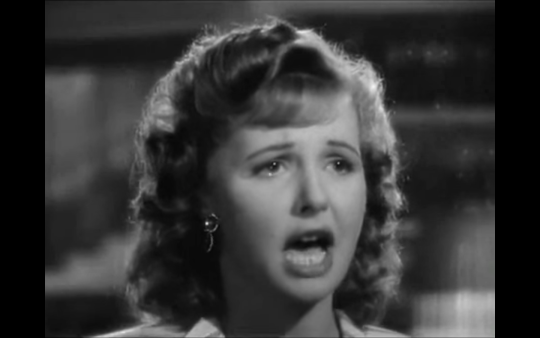
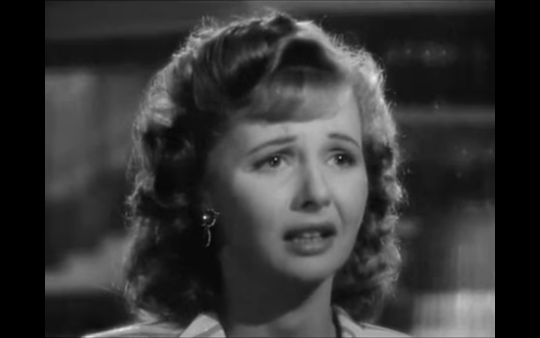
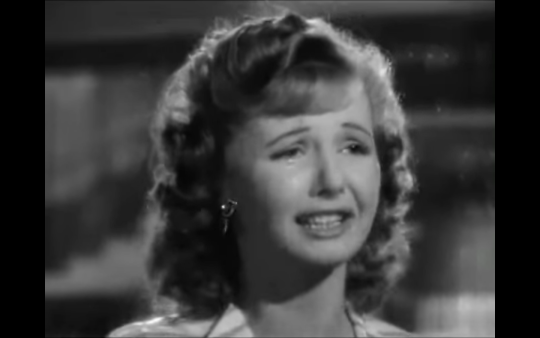
there’s one person in this scene that deserves special mention. did you notice the woman at the bar, on the verge of tears as she belts out la marseillaise? she’s yvonne, rick’s ex-girlfriend in the film. in real life, the actress’s name is madeleine lebeau and she basically lived the plot of this film: she and her jewish husband fled paris ahead of the germans in 1940. her husband, macel dalio, is also in the film, playing the guy working the roulette table. after they occupied paris, the nazis used his face on posters to represent a “typical jew.” madeleine and marcel managed to get to lisbon (the goal of all the characters in casablanca), and boarded a ship to the americas… but then they were stranded for two months when it turned out their visa papers were forgeries. they eventually entered the US after securing temporary canadian visas. marcel dalio’s entire family died in concentration camps.
go back and rewatch the clip. watch madeleine lebeau’s face.
casablanca is a classic, full of classic acting performances. but in this moment, madeleine lebeau isn’t acting. this isn’t yvonne the jilted lover onscreen. this is madeleine lebeau, singing “la marseillaise” after she and her husband fled france for their lives. this is a real-life refugee, her real agony and loss and hope and resilience, preserved in the midst of one of the greatest films of all time.
I remember when I first saw Casablanca, and being struck by this scene, and that was without knowing the history behind it or all that Madeleine Lebeau – and so many more refugees- had suffered.
Do yourself a solid and watch this film. Watch this scene. And most of all, remember refugees, the ones who lived then and especially the ones who live now.
I knew this movie, of course, it’s one of the mains from my mother’s list of movies you should see “At least once in a lifetime”, but I had never until now felt any desire to watch it.
It’s one of those movies where context and the (not so quite) subtle subtext are vitally important to understanding the importance of it, not only as a classic piece of film making (hokey old timey speech and all), but as a political and social commentary of the times, rooted fiercely in protest and a whole lot of “fuck you fascists”.
I never really got it until my father (raised by his Jewish grandmother who fled Austria with the clothes on her back and a single suitcase and swathes of dead loved ones left behind) sat me down and told me the full context of when the movie was made, what it was actually about and who it was made for.
It made his casual way of saying “here’s looking at you kid” whenever we skipped school to go to protest rallies (start of the Iraq war) all the more poignant for me. I just thought he was being an old man quoting the popular cult media from his youth. But it means so much more than that.
Cause here’s the thing about that iconic line from the end of the movie: you’ll find screeds and screeds of people talking about how he’s using it to flirt with her once last time and just how suave it is, alluding that it’s purely about her youth and beauty and his ever lasting love for her even though she’s married to someone else.
But that line? Had been in use for a good 50+ years prior to Casablanca gracing the screens. It’s a toast, a wish for your health. And the people watching would have known the significance of it, particularly the displaced Europeans knowing that they’ll likely never see their loved ones again.
Cause here’s looking at you kid– and the unspoken meaning behind it– one last time.
Rick isn’t just letting go of the love of his life in that scene. He’s using his position of power and privilege as an American with access to outside networks (predominantly crime related, but hey) to help her escape the country with her highly persecuted and sought after husband to a place of safety.
He had the option to just take her himself and run– and her husband even urges him to do so at one point. But Rick endeavors to get them both to safety, and he shows up armed to do so. He fights for their freedom even though he doesn’t have to. He goes from staunchly refusing to help them out of bitterness and cynicism, to realizing that if he doesn’t do something people are going to die. And he doesn’t just save the woman he loves, which would be oh so easy. He saves the man he hates too. Because he can, so he must.
The final scene ends with Renault (played by Claude Rains, an Englishman), head of the local police (and a character largely played for laughs), making the decision not to arrest Rick or anyone else involved when ordered to, actively defying the orders of a fascist. When he and Rick are walking away, he insinuates that he and Rick should join the French Resistance movement in
Brazzaville, and Rick again delivers the other iconic line from the movie: “Louis, I think this is the beginning of a beautiful friendship.”
Casablanca is about forging alliances in the face of tyranny. It’s about doing what is right, even though it goes against the law when the law is corrupt. It’s about being willing to give up your own liberties and comfort to preserve the things you love, even though it won’t directly benefit you. Hell, it might even kill you. But someone’s got to do it.
And yea, it’s old, it’s dated and a product of it’s time and it shows. There are times when the modern viewer will cringe and rightly so. But it was also incredibly out there for its time, when the world was going to absolute hell in a hand basket and it seemed like the walls were closing in, it held many important messages, but primarily: Resist.
So here’s looking at you, kids.
Oh my god, I wrote a whole paper on this for advanced comp last year and let me tell you:
only 3 (THREE) of the credited actors were american born– Humphrey Bogart, Dooley Wilson, and Joy Page. Every other actor (and a large part of the crew as as well) was an immigrant, emigree, refugee, whatever you want to call them. This was a story about and made by refugees. Pauline Kael, an acclaimed film critic for The New Yorker, said about the movie, “If you think of Casablanca, and think of all those small roles as being played by
Hollywood actors faking the accents, the picture wouldn’t have had anything
like the color and tone it had.”
and by god was she right.
Madeline LeBeau, chased from her home at 17 years old, sobbing during La Marseilles, doesn’t have the same effect.
Paul Henreid, self-described as “naked in four countries,” playing a man desperate to continue to fight the good fight, doesn’t have the same effect.
Conrad Veidt, who played sympathetic Jewish characters, whose wife was Jewish, whom the Nazis denounced, saying “
there will no longer be any reason for a single finger in Germany to
point to him in praise;” Conrad Veidt, who gave personal loans to the British government, who donated the majority of his earnings to war relief efforts, who was vehemently anti-Nazi, who was typecast as Hollywood’s go-to Nazi, who died only a year after the film premiered, who never got the chance to rebuild what was a stunning career, who has been forever known as Major Strausser– even his sheep-in-wolf’s-clothing performance does not have the same effect.
There’s only one clear mention of time in the entire film– “If it’s December 1941 in Casablanca, what time is it in New York?” Rick asks Sam, before he’s made his decision.
Casablanca was released in 1942, after the US had entered the war. In December, 1941. “If this is happening now,” Rick might have asked Sam, “what time is the right time to act?”
Michael Roth is a professor as Weslyan University, who teaches a history through film course. He says the only movie most of his students have heard about is Casablanca, and teaching it recently was much different than previous semesters.
“The immigrant story at the heart of Casablanca
is more powerful than ever. Many of my students are sympathetic to the refugees
escaping brutal conditions, and in our current political atmosphere this is no
small theme.” The lasting effect of Casablanca, is that it “forces us to consider what it takes for good people to act in a corrupt
world.”
Does it take a teary-eyed rendition of a national anthem, sung by
real-life refugees, to call us to action? Does it take love? Or does it just
take a little bit of aspiration, some gumption, and a willingness to look at
the big picture?
Lover of: Queen Christina of Sweden. Tenure: 1644 – 1654. Royal Bastards: None. Fall From Power: The queen left the country after relinquishing the throne.
In 1644, Queen Christina met fifteen-year-old Ebba Larsdotter Sparre who had been sent to court by her family to serve as the queen’s handmaiden. Christina was one of the most educated women of the 17th century with a passion for books, paintings and sculptures. She also had an intense distaste of anything feminine and caused a scandal by refusing to marry. She would frequently forget to comb her hair, had a tendency to dress sloppily and wore men’s shoes for the sake of convenience. In contrast, Ebba was a celebrated beauty who was nicknamed La belle comtesse at court. Despite their differences, Ebba became the queen’s closest female friend and she was affectionately called “Belle.” The pair spent most of their time together and Christina even introduced Ebba to the English ambassador as her “bed-fellow” and told the man that her intellect was as striking as her body. The question of Christina’s sexuality has been debated for decades and she has been classified as heterosexual, asexual, lesbian or bisexual. She wrote near the end of her life that she was “neither male nor hermaphrodite, as some people in the world have pass’d me for.” Ebba married Count Jakob Kasimir de la Gardie (after Christina asked her to break off an engagement to Bengt Gabrielsson Oxenstierna) in 1652 and had three short-lived children by him, though the marriage was unhappy.
Christina continued to write passionate love letters to Ebba even after the former queen had left Sweden. Attempts for them to reunite were continually thwarted by Ebba’s family, though her own ill health prevented her from visiting in 1661: she died less than a year later about age thirty-three.
Sources
” Ebba Sparre” by Sébastien Bourdon, 1653 (left image).
Crompton, Louis. Homosexuality and Civilization. Harvard University Press (2009).
Buckley, Veronica. Christina; Queen of Sweden. London: Harper Perennial (2004). ISBN 1-84115-736-8.
Åkerman, S.. Queen Christina of Sweden and her circle: the transformation of a seventeenth century philosophical libertine. New York: E.J. Brill (1991). ISBN 90-04-09310-9.
everything about this is fucking hilarious. i’m sorry, random pompeii man, but your death was some looney tunes bullshit and the framing of this photograph isn’t helping.
but i try to remember the positive lesbian historical experiences…
like Queen Christina of Sweden (1626-1689) – she abdicated her throne rather than have to marry a man and bear children.
Anne Lister (1791-1840) – she was steadfast in her love of women, and unashamed about it:
“I love and only love the fairer sex…
my heart revolts from any love but theirs.” – Journals, 29
October 1820
The Ladies of Llangollen (1730s-1830s) – two women who ran away together for their love where they collected books and studied literature. They’re buried together.
Jane Adams (1860-1935) – the co-founder of the ACLU! She was with her partner for 40 years.
Mary Grew (1813-1896) – a leader in the abolitionist and women’s rights movement.
Renee Vivien (1877-1909) – my personal favourite historical lesbian, she blew all her inheritance money throwing champagne parties for all her lesbian friends and running away to Japan when she got her heart broken
Edie Windsor (1921-2017) – the reason gay marriage exists in the USA.
Catherina Margerethe Linck (?-1721) – a pirate! obtained a legal marriage to a woman by posing as a man.
It can be so hard to think about the horrors women and lesbians have been through. It’s heartbreaking. But there is light in some places. We have to celebrate them. ♥
“An opportunity to join in with the current colouring trend and apply your colouring skills to images from our collections. We’ve provided a colouring book to get you started, but feel free to use our online resources to find your own. Don’t forget to share your final product on social media with the hashtag #ColorOurCollections!
Carpathia received Titanic’s distress signal at 12:20am, April 15th, 1912. She was 58 miles away, a distance that absolutely could not be covered in less than four hours.
(Californian’s exact position at the time is…controversial. She was close enough to have helped. By all accounts she was close enough to see Titanic’s distress rockets. It’s uncertain to this day why her crew did not respond, or how many might not have been lost if she had been there. This is not the place for what-ifs. This is about what was done.)
Carpathia’s Captain Rostron had, yes, rolled out of bed instantly when woken by his radio operator, ordered his ship to Titanic’s aid and confirmed the signal before he was fully dressed. The man had never in his life responded to an emergency call. His goal tonight was to make sure nobody who heard that fact would ever believe it.
All of Carpathia’s lifeboats were swung out ready for deployment. Oil was set up to be poured off the side of the ship in case the sea turned choppy; oil would coat and calm the water near Carpathia if that happened, making it safer for lifeboats to draw up alongside her. He ordered lights to be rigged along the side of the ship so survivors could see it better, and had nets and ladders rigged along her sides ready to be dropped when they arrived, in order to let as many survivors as possible climb aboard at once.
I don’t know if his making provisions for there still being survivors in the water was optimism or not. I think he knew they were never going to get there in time for that. I think he did it anyway because, god, you have to hope.
Carpathia had three dining rooms, which were immediately converted into triage and first aid stations. Each had a doctor assigned to it. Hot soup, coffee, and tea were prepared in bulk in each dining room, and blankets and warm clothes were collected to be ready to hand out. By this time, many of the passengers were awake–prepping a ship for disaster relief isn’t quiet–and all of them stepped up to help, many donating their own clothes and blankets.
And then he did something I tend to refer to as diverting all power from life support.
Here’s the thing about steamships: They run on steam. Shocking, I know; but that steam powers everything on the ship, and right now, Carpathia needed power. So Rostron turned off hot water and central heating, which bled valuable steam power, to everywhere but the dining rooms–which, of course, were being used to make hot drinks and receive survivors. He woke up all the engineers, all the stokers and firemen, diverted all that steam back into the engines, and asked his ship to go as fast as she possibly could. And when she’d done that, he asked her to go faster.
I need you to understand that you simply can’t push a ship very far past its top speed. Pushing that much sheer tonnage through the water becomes harder with each extra knot past the speed it was designed for. Pushing a ship past its rated speed is not only reckless–it’s difficult to maneuver–but it puts an incredible amount of strain on the engines. Ships are not designed to exceed their top speed by even one knot. They can’t do it. It can’t be done.
Carpathia’s absolute do-or-die, the-engines-can’t-take-this-forever top speed was fourteen knots. Dodging icebergs, in the dark and the cold, surrounded by mist, she sustained a speed of almost seventeen and a half.
No one would have asked this of them. It wasn’t expected. They were almost sixty miles away, with icebergs in their path. They had a respondibility to respond; they did not have a responsibility to do the impossible and do it well. No one would have faulted them for taking more time to confirm the severity of the issue. No one would have blamed them for a slow and cautious approach. No one but themselves.
They damn near broke the laws of physics, galloping north headlong into the dark in the desperate hope that if they could shave an hour, half an hour, five minutes off their arrival time, maybe for one more person those five minutes would make the difference. I say: three people had died by the time they were lifted from the lifeboats. For all we know, in another hour it might have been more. I say they made all the difference in the world.
This ship and her crew received a message from a location they could not hope to reach in under four hours. Just barely over three hours later, they arrived at Titanic’s last known coordinates. Half an hour after that, at 4am, they would finally find the first of the lifeboats. it would take until 8:30 in the morning for the last survivor to be brought onboard. Passengers from Carpathia universally gave up their berths, staterooms, and clothing to the survivors, assisting the crew at every turn and sitting with the sobbing rescuees to offer whatever comfort they could.
In total, 705 people of Titanic’s original 2208 were brought onto Carpathia alive. No other ship would find survivors.
At 12:20am April 15th, 1912, there was a miracle on the North Atlantic. And it happened because a group of humans, some of them strangers, many of them only passengers on a small and unimpressive steam liner, looked at each other and decided: I cannot live with myself if I do anything less.
I think the least we can do is remember them for it.
In 1670, Louis XIV’s finance minister, Jean-Baptiste Colbert, ordered the planting of the Forest of Tronçais to provide masts for the French navy 200 years hence. His order established one of the principal stands of oaks in Europe, carefully interplanted with beeches and larches to encourage them to grow straight, tall, and free of knots. By the time they matured, in the 19th century, they were no longer necessary. Historian Fernand Braudel wrote, “Colbert had thought of everything except the steamship.”


 failed2be-chill